Lifestyle
Threading, Waxing Or Laser? Facial Hair Removal For Women Compared
Threading, waxing, creams, laser, electrolysis and alkaline wash compared, plus why sudden or thick facial hair is worth mentioning to your GP.
Facial hair removal for women covers everything from a quick pluck in the bathroom mirror to a course of laser treatment, and the best choice depends on your hair, your skin and how long you want results to last. Removing it is a personal choice rather than something you need to do.
This guide compares the main options side by side and explains when new or increased hair is worth mentioning to a GP before you book anything.
Facial Hair Removal For Women Starts With Your Hair Type
Two broad types of hair tend to bother people. Fine, pale, downy hair on the cheeks and upper lip is soft and hard to see up close. Coarser, darker hair on the chin, jaw or upper lip is more noticeable and usually grows back more stubbornly.
The type matters because some methods only work well on one kind. Laser, for example, relies on colour in the hair, so it is generally a poor match for very fine, light hair.
When Facial Hair Could Have A Medical Cause
Thick, dark hair on the face, neck, chest, tummy, lower back, buttocks or thighs in women is called hirsutism. The NHS explains that the most common cause is polyendocrine metabolic ovarian syndrome (PMOS), the new name for what used to be called polycystic ovary syndrome (PCOS). Some medicines and rarer hormonal conditions can also cause it.
The NHS guidance on hirsutism says to see a GP if you have this kind of hair. It advises asking for an urgent appointment if new thick, dark hair suddenly starts growing on your face and body, particularly if your voice is getting lower or your muscles are getting bigger. A GP can look for an underlying cause, and the NHS also lists a prescription cream called eflornithine among the options.
Quick Options You Can Do At Home
Shaving And Dermaplaning Tools
Fast, cheap and painless. The downside is that regrowth appears within a day or two because the hair is cut at the surface.
Plucking
Good for a few stray chin hairs. It is slow for larger areas and can be uncomfortable.
Hair Removal Creams And Bleaching
Creams dissolve hair at the surface, while bleach lightens it so it is less visible. Always choose a product made for the face and follow the packet’s instructions on skin testing, as these products can irritate sensitive skin.
Salon Treatments For Longer Results
Threading
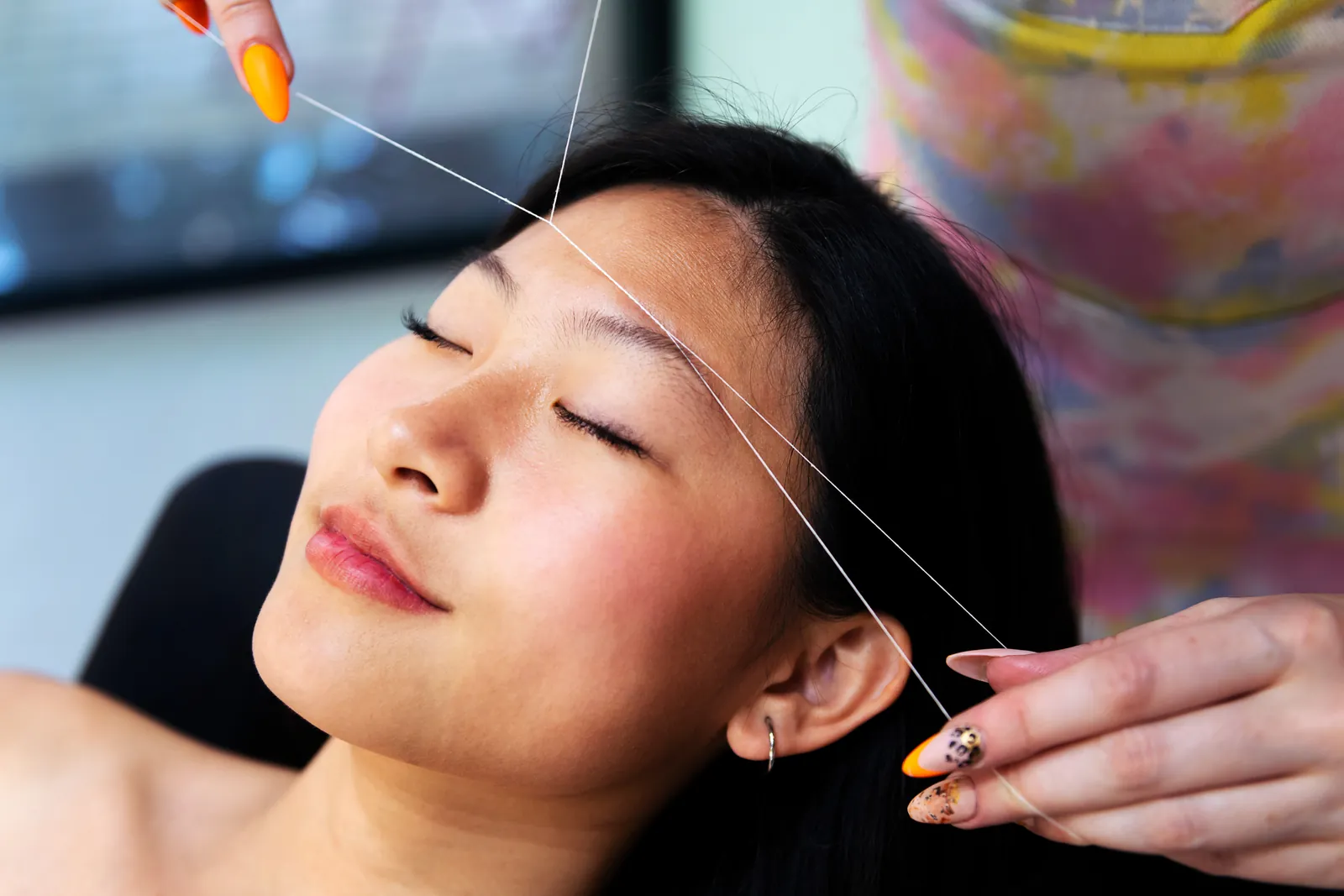
A therapist uses a twisted cotton thread to lift out rows of hair from the root. It is precise, which makes it popular for brows and the upper lip, and it uses no chemicals.
Waxing
Waxing removes hair from the root, so smooth skin tends to last longer than with shaving. Warm wax on delicate facial skin is best left to a trained therapist who knows how to protect the area. Salons such as Beauty by Ruth offer waxing using professional wax systems, and a first visit is a good time to ask which areas they treat. The NHS advises anyone taking the acne medicine isotretinoin not to use waxing or laser treatments.
Alkaline Wash
DMK’s alkaline wash is a paste that the brand says dissolves fine, downy hair. DMK positions it for the soft hair that laser cannot target, rather than coarse dark hair.
Longer-Lasting Options Such As Laser And Electrolysis
Laser and IPL use light that targets colour in the hair, which is why DMK notes they are unsuitable for very fine, pale hair. Electrolysis treats hairs one at a time, so it can be slow where growth is dense.
The NHS notes that these treatments are not usually available on the NHS and are not usually permanent. It also says results vary from person to person and that both carry risks, so research them carefully.
Electrolysis is one of the treatments that councils register under the Local Government (Miscellaneous Provisions) Act 1982. Sefton Council’s registration page, for example, says both the practitioner and the premises need to be registered, and your own council’s website should explain the rules where you live. It is fair to ask to see a registration certificate.
Choosing The Right Facial Hair Removal For Women
- A few stray hairs. Plucking or threading.
- Fine, downy hair across the cheeks. Shaving, threading or an alkaline wash.
- Dark hair on the upper lip or chin. Threading or waxing, or laser or electrolysis if you want longer gaps between sessions.
- Sensitive or reactive skin. Ask a therapist for a consultation before trying wax or creams.
- New, thick or rapidly increasing hair. Speak to your GP first.
Frequently Asked Questions
Which Facial Hair Removal For Women Lasts Longest?
Methods that remove hair from the root, such as threading and waxing, usually give longer gaps than shaving or creams. Laser and electrolysis aim for longer-lasting reduction over a course of sessions, though the NHS notes results vary.
Is Laser Hair Removal Permanent?
The NHS says longer-lasting treatments such as laser and electrolysis are not usually permanent, and results vary.
Can I Get Hair Removal On The NHS?
Laser and electrolysis are not usually available on the NHS. A GP can, however, look into the cause of excess hair and talk you through treatments such as eflornithine cream.
Which Method Is Best For Sensitive Skin?
Threading avoids heat and chemicals, which some people find gentler. A consultation with a therapist is the best way to decide.
Finding What Works For You
There is no single right answer, and many women combine methods. Start with your hair type, keep an eye out for sudden changes and choose a trained, registered practitioner for anything beyond the basics. You can find more beauty and lifestyle articles on Beyond The Garden Gates.