House & Home
Getting Your Home Ready For Winter Starts In October
The jobs you do in October decide what kind of January you have. From power cuts to frozen pipes, here is what to sort before the first winter storm.
Getting your home ready for winter is one of those jobs that never feels urgent in October. The evenings are still mild, the heating has barely been touched and the garden furniture is still out. Yet the first proper storm of the season rarely sends a warning letter. When it arrives, the homes that cope best are usually the ones where somebody spent a few quiet autumn weekends sorting out the dull stuff.
This is not about panic buying or turning the house into a bunker. It is about a handful of small checks that decide whether January is an inconvenience or a crisis.
Why Getting Your Home Ready For Winter Starts Now
The Met Office runs a campaign called WeatherReady, and its list of things to do now to prepare for winter reads less like an emergency plan and more like a to-do list for a rainy Saturday. Service the boiler. Insulate the pipes. Find the stopcock. Secure the garden furniture. Check on the neighbours.
None of these tasks is difficult. The trouble is timing. Every one of them is easy in daylight on a calm afternoon, and miserable in the dark with water on the floor or a fence panel flapping in a gale. October gives you daylight, dry weekends and tradespeople who are not yet fully booked. By the time the forecasts turn amber, that window has closed.
Getting Your Home Ready For Winter Storms And Power Cuts
Power cuts are the most common way a winter storm reaches inside the house. The Met Office suggests storing the power cut helpline number, 105, on your phone in case networks go down. It also recommends considering a separate battery charger, which in practice means keeping a power bank charged and somewhere you can find it.
The number 105 is easy to forget until you need it. According to the official 105 service, it is free and available across England, Scotland and Wales from most landlines and mobiles. It puts you through to your local electricity network operator, whichever supplier you pay your bills to. You can also use it to report damaged power lines or substations. Where there is a serious immediate risk, the service says to contact the emergency services as well.
The rest is old-fashioned common sense. The Met Office suggests a grab bag with bottled water, medicines, a torch, a radio and batteries, and copies of important documents. A torch in a known drawer beats a phone torch that is also your only link to the outside world.
Frozen Pipes And The Stopcock Question
Ask most households where their stopcock is and you will get a pause, then a guess. The Consumer Council for Water says it is usually under the kitchen sink, but it could be somewhere else in the house, or even outside. Its winter advice for households is clear that you should find it before you need it.
The same guidance recommends lagging exposed pipes, covering outside taps and fitting insulating jackets to water tanks. If a pipe does freeze, it advises turning off the water at the stop tap and thawing the pipe slowly. A hairdryer on warm, a hot water bottle or a heated cloth wrapped around the pipe will do the job. If a pipe bursts, shut off the supply, call a plumber, open the indoor taps and photograph the damage for insurance.
If you are worried what shutting off the water does to the heating, we looked at whether turning the water supply off affects your boiler in an earlier piece. Vulnerable households can also join their water company’s Priority Services Register, which can mean bottled water deliveries if supplies are interrupted.
Gutters, Fences And Everything That Can Fly
Outside, the risks are more dramatic. The Met Office points out that loose cast iron guttering could be lethal in strong winds, alongside roof slates and tiles. Its advice is to check fences and roof tiles and secure outdoor furniture before the season turns.
It is easy to underestimate how much is lying loose in an ordinary garden. The Met Office notes that garden furniture, children’s toys and even trampolines can fly around in high winds and cause damage. A wobbly fence panel that has survived all summer can become a sail overnight. Walk the boundary on a calm day, tighten what needs tightening and store what does not need to stay out.
The Boiler That Has Been Asleep All Summer
This is the part of getting your home ready for winter that deserves the most care. Heating systems sit idle for months, then work hard the moment the temperature drops. The Gas Safe Register describes an annual safety check by a Gas Safe registered engineer as the most important thing you can do to minimise the risk of carbon monoxide.
Carbon monoxide gives few clues. The Gas Safe Register’s carbon monoxide advice lists six main symptoms: headaches, dizziness, nausea, breathlessness, collapse and loss of consciousness. Warning signs on appliances include a floppy yellow or orange flame instead of a crisp blue one, dark sooty staining and pilot lights that frequently blow out. If you suspect poisoning, it says to turn off the appliance, open doors and windows and get into fresh air.
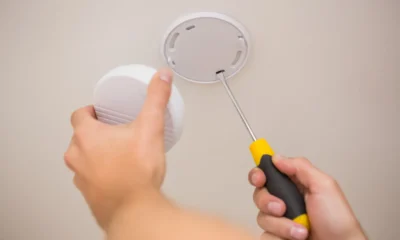
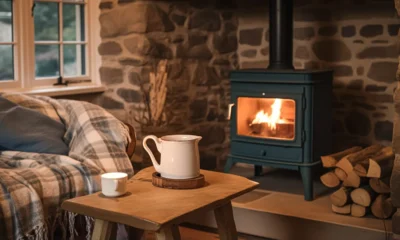
The Register calls a carbon monoxide alarm a good second line of defence rather than a replacement for servicing. Specialist suppliers stock battery and mains-powered models, including units with a 10-year lifespan, and the range of carbon monoxide alarms from The Safety Centre shows what is available for homes. If you also use a wood burner, our piece on how many kiln-dried logs you need for winter is worth a read before the cold sets in.
Darker Evenings And A Safer Front Door
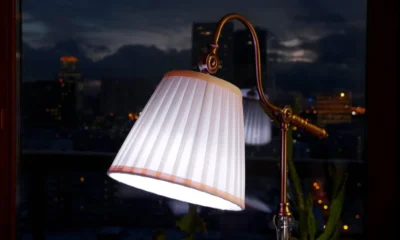
When the clocks go back, homes sit in darkness from late afternoon. West Yorkshire Police puts it plainly in its Lighten Up crime-prevention advice. Burglars prefer to work unseen and favour empty houses, and a dark house signals both.
The force suggests leaving a light on in a well-used room such as the lounge or a bedroom, rather than a hallway. Timer switches can trigger lights automatically, and it recommends resetting them earlier as the days shorten. Low-energy dusk-to-dawn lighting outside, sited out of easy reach, is another option. It also makes the point that privacy for you is privacy for a burglar, so the impression that neighbours can see your home helps.
A Good January Starts Next Door
Winter preparation is not only about your own four walls. The Met Office encourages people to check on elderly relatives and neighbours, noting that human contact can have really positive effects. It also warns that cold weather is a particular risk for people over 65, and that homes should ideally be heated to at least 18°C.
A quick conversation in October can cover a lot. Does the older couple next door have a torch? Do they know about 105? Has their boiler been serviced? Offering to clear a gutter or lag a pipe costs an hour and may save someone a very long night.
Getting your home ready for winter will never make a weekend feel exciting. Nobody frames a photo of a lagged pipe. But a serviced boiler, a known stopcock, a charged power bank and a quiet garden are what separate a stormy night from a disaster. Do the jobs in October and January becomes just another month.
For more seasonal ideas for the house and garden, keep an eye on Beyond The Garden Gates.