Garden & DIY
Common Garden Weeds And How To Get Rid Of Them
A practical guide to common UK garden weeds, from dandelions to bindweed, with non-chemical control methods first and safety advice on weedkillers.
A weed is simply a plant growing where you do not want it, and most common garden weeds fall into one of two camps. Some weeds pop up as seedlings and are gone with a flick of the hoe, while others have deep or spreading roots that come back year after year. Knowing which kind you are dealing with makes all the difference to how you tackle it.
This guide covers the main types of weed, some of the most common culprits in UK gardens and the best ways to control them, starting with methods that need no chemicals at all.
Annual And Perennial Weeds
When it comes to common garden weeds, the RHS splits them into two broad groups:
- Annual weeds are generally shallow-rooted and easy to pull out, but they produce huge quantities of seed. Chickweed and bittercress are familiar examples. The key is to remove them before they flower and set seed.
- Perennial weeds come back every year and often have deep or extensive root systems. Dandelions, bindweed and ground elder fall into this group. Many can regrow from small pieces of root, so they need more persistence.
Non-Chemical Ways To Control Common Garden Weeds
The RHS says non-chemical controls are usually effective and sufficient for most gardens. Its guide to non-chemical weed control covers these methods in detail.
Hoeing
Running a hoe over beds and between rows kills most weed seedlings. Do it on a warm, dry or windy day so the severed weeds shrivel rather than rerooting. Little and often works far better than an occasional blitz.
Hand Weeding And Forking Out
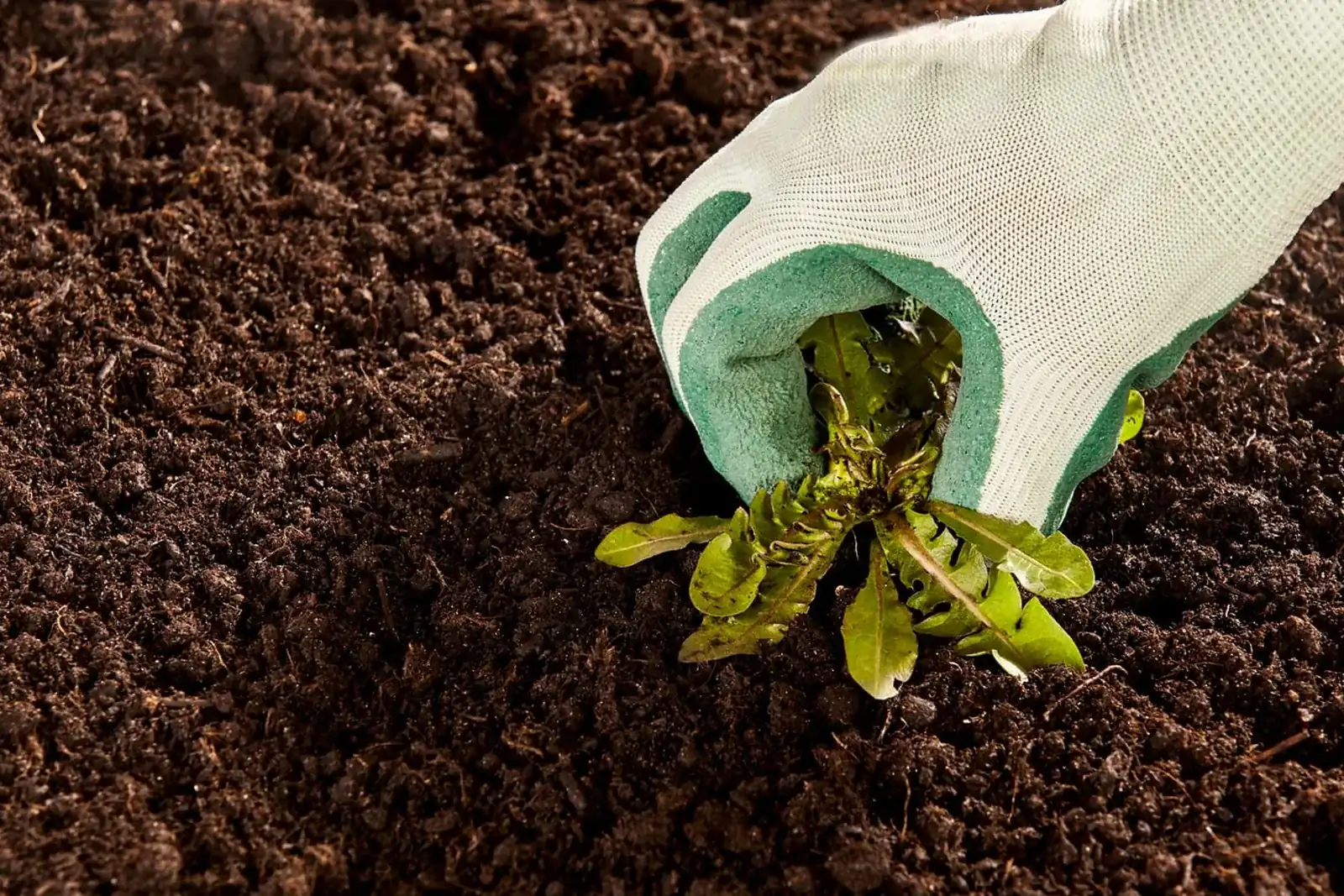
Most annual weeds pull out easily by hand. For deep-rooted perennials, push a hand fork in to its full depth and lever out the whole root. Larger weeds can be dug out with a spade or border fork.
Mulching
A thick layer of organic mulch, such as bark or wood chips, blocks light from weed seeds and seedlings. The RHS suggests a layer 10 to 20cm deep. For bare beds in winter, a layer of cardboard underneath helps smother annual weeds.
Smothering
For stubborn perennials, cover the ground with cardboard topped with about 20cm of organic matter, or with a biodegradable mulch film or jute mat. Annual weeds can be suppressed in a few months, but perennials may need covering for at least a few growing seasons.
Repeated Cutting
Cutting off top growth again and again starves roots of the energy they get from leaves. In lawns, regular mowing every one to two weeks through spring and summer weakens many weeds over time.
Common Garden Weeds To Know
Dandelion
Dandelions have yellow flowers on hollow stalks from March to October, followed by the familiar fluffy seedheads. They regrow from fragments of root, so dig out young plants before the taproot gets established and avoid chopping roots up. The RHS recommends a mulch about 7.5cm deep in late winter to reduce seedlings. It is worth leaving a few in wilder corners if you can: their early flowers are a valuable food source for wildlife when little else is in bloom.
Bindweed
Hedge bindweed has heart-shaped leaves and white, sometimes pale pink, funnel-shaped flowers from June to September. Field bindweed is smaller with grey-green, arrow-shaped leaves. Both can regrow from tiny sections of root, so avoid hoeing, digging or rotavating where they grow. Instead, fork out as much root as you can, keep removing new shoots, or smother the area. The RHS says persistent removal can eventually eradicate it, with no need for weedkiller.
Ground Elder
Ground elder forms dense cover of fresh green leaflets 30 to 60cm high, with flat heads of tiny white flowers. It spreads through a shallow mat of pale roots and regrows from small pieces. Regular removal of new stems, forking out roots and deadheading all help. Smothering works well, but the soil may need to stay covered for a few years.
A Note On Composting Weeds
Annual weeds without seedheads can go on the compost heap. The RHS warns against adding weed roots, taproots, bulbs or seedheads to a home compost bin, because it may not get hot enough to kill them. Check your local council’s guidance on how to dispose of these instead.
If You Do Use A Weedkiller
The RHS advises using pesticides only as a last resort, in a minimal and highly targeted way. If you decide to use one:
- Read the label carefully before use. The RHS points out that following label instructions is a legal requirement.
- Avoid direct contact. Wear rubber gloves, do not eat, drink or smoke while applying, and wash your hands afterwards.
- Keep children, vulnerable adults and pets well away during spraying and at least until the foliage is dry.
- Store products in their original containers with lids firmly closed, in a cool, dark, frost-proof place, ideally locked.
- Rinse sprayers with three small washes of water, spraying the rinse onto areas or plants listed on the label.
Japanese Knotweed And The Legal Points
Japanese knotweed is a special case. According to GOV.UK, you are not legally required to remove it from your land unless it is causing a nuisance, but you must stop it spreading off your property, and you can be prosecuted for causing it to spread into the wild.
Soil or plant material contaminated with knotweed may be classed as controlled waste. You must not dispose of it with other surplus soil or sell contaminated soil as topsoil. If the plants are near water and you plan to use a weedkiller, you need agreement from the Environment Agency first. Read the full GOV.UK guidance on stopping Japanese knotweed spreading before tackling it.
Quick Checklist
- Work out whether you are dealing with annual or perennial weeds.
- Hoe seedlings on dry days and pull annuals before they seed.
- Fork out perennial roots fully and avoid chopping them into pieces.
- Mulch bare soil thickly, or smother problem patches for a season or more.
- Keep weed roots and seedheads out of the home compost.
- Treat weedkiller as a last resort and always follow the label.
Once your common garden weeds are under control, find more practical projects in our garden and DIY section.
You’ll find more easy, practical garden projects like this on Beyond The Garden Gates.