Motoring
Finding Motorcycle Boots That Fit, From Sports To Touring
A plain-English guide to picking riding boots: the EN 13634 CE label, sports, touring and urban styles, waterproofing, grip, fit and care.
If you are wondering how to choose motorcycle boots, start with the fact that your feet and ankles sit right where a bike lands in a slide. Proper riding boots are built to resist scraping, stop the sole being crushed and keep the ankle from twisting, while still letting you work the gear lever and walk to the café at the end of the ride. This guide explains the safety label, the main styles and how a good pair should feel.
The Highway Code notes that strong boots, gloves and suitable clothing may help to protect you in a collision. No boot makes riding risk-free, but the right pair gives your feet a far better chance than trainers or work boots. For the wider picture on kit, see our guide to whether you need to wear gear on a motorcycle.
Start With The CE Label On Your Motorcycle Boots
Motorcycle footwear sold as protective equipment is tested to EN 13634, the European standard for protective footwear for motorcycle riders. The current version is EN 13634:2017. Look for a CE-rated label inside the boot, usually on the tongue or the inner leg, showing a row of four numbers.
What The Four Numbers Mean
- Height of the upper. 1 means a lower, ankle-height boot or shoe; 2 means a taller boot that rises up the shin.
- Impact abrasion resistance. How long the material survives being dragged against an abrasive surface. Level 2 materials must last noticeably longer than level 1.
- Impact cut resistance. How far a blade dropped on to the material cuts through it. Level 2 allows less penetration than level 1.
- Transverse rigidity. How well the sole resists being squashed from side to side, which helps protect the foot if it is trapped or crushed.
Each test is scored separately, so a boot can reach level 2 in some areas and level 1 in others. Level 1 is treated as the minimum for useful protection with good comfort, while level 2 offers higher performance. More 2s generally means more protection, often with a stiffer boot.
Optional Letters Underneath
Makers can pay for extra tests, and passes appear as letters below the numbers:
- IPA and IPS: approved impact protection at the ankle and the shin.
- WR: resistance to water penetration.
- FO: the outsole has passed a fuel and oil resistance test.
- SRA, SRB or SRC: slip resistance of the sole on different test surfaces.
The testing organisation SATRA’s overview of EN 13634 also lists water vapour permeability of the upper among the optional tests.
Types Of Motorcycle Boots
The style you pick should follow how and where you ride.
Sports And Race Boots
Tall, stiff and closely fitted, with hard shin plates, toe sliders and often an internal brace to limit ankle twist. The Alpinestars Supertech R, for example, has a microfibre upper, a separate 3D mesh inner bootie for support, a TPU shin plate and is certified to EN 13634:2017. Boots like this are built for fast road riding and track days, not long walks.
Touring And Adventure Boots
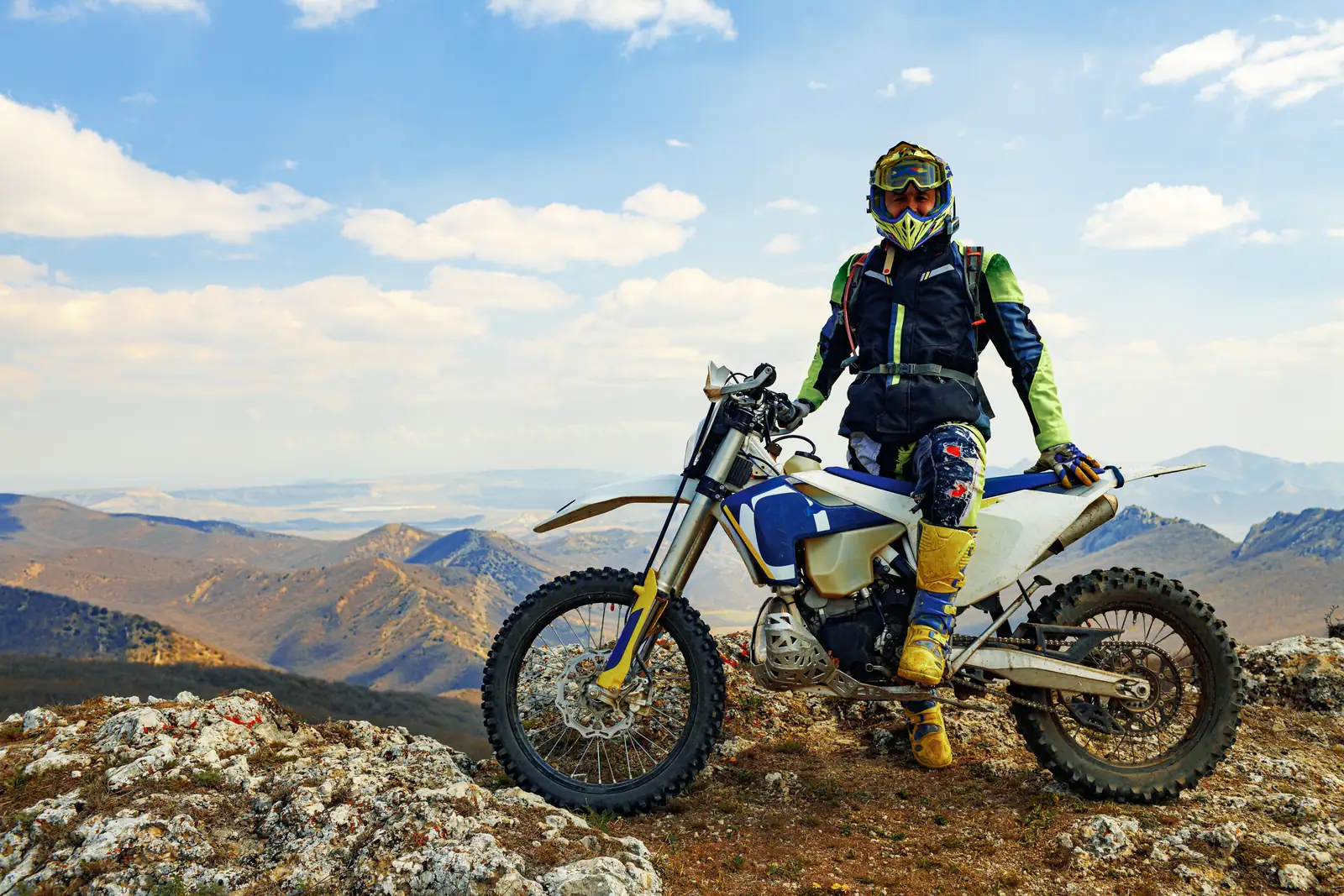
Usually tall, with a waterproof lining, a grippier and more flexible sole and closures that are easy to work with cold hands. The TCX Explorer 4 GTX pairs a microfibre and polyamide upper with a Gore-Tex membrane, an OrthoLite insole and a side zip with Velcro, and is certified to EN 13634. Enduro-style off-road boots sit at the stiff end of this group, with heavy buckles and a rugged sole.
Short And Urban Boots
Ankle-height riding boots and trainers that look like everyday footwear. They are the easiest to walk in and suit commuting and town riding, but a lower upper covers less of the leg, so check the label: many score a 1 for height. Some are unlined and breathable for summer; others add a waterproof liner.
Ladies’ Boots
Several makers cut women’s versions of popular boots on a different last, with a narrower heel and a different calf shape. If unisex boots gape at the ankle or pinch at the calf, a women’s fit is worth trying. The same EN 13634 label applies.
Ankle, Shin And Toe Protection
The ankle is the joint most at risk of twisting in a fall, so look for firm cups or armour on both sides and, on sports boots, some form of brace that lets the ankle flex forwards and back but resists sideways and twisting movement. The IPA marking tells you the ankle protection has passed an impact test.
A taller boot also protects the shin, and IPS confirms that protection has been tested. Toe and heel reinforcement stops the front and back of the boot collapsing, and a gear change pad on the left toe saves the upper from wear. When you try boots on, press the ankle and shin areas; you should feel solid shells, not just padding.
Waterproof Membranes And Weather
Most waterproof boots use a membrane, a thin layer between the outer and the lining that blocks liquid water but lets some sweat vapour escape. Gore-Tex is the best known, and several makers use their own. A boot that passed the WR test will say so on the label. Anyone who rides through a British winter should weigh up our winter riding tips too.
A membrane keeps rain out, but water can still run in from the top. Wear your trousers over the boot, not tucked in, so rain drains down the outside. Our motorcycle trousers buying guide covers cuffs and boot compatibility. In hot weather an unlined or perforated summer boot will feel cooler than a waterproof one.
Soles And Grip
A riding sole needs to be stiff enough to protect the foot and stop it twisting, yet give enough feel through the footpeg to control the bike. Race boots have slim, hard soles for precise peg feel; touring and adventure soles are deeper and softer for grip when you put a foot down on a wet junction or a gravel lay-by.
Check the tread pattern, a heel that sits comfortably on the peg, and whether the sole is stitched or bonded well to the upper. The SRA, SRB or SRC markings tell you the sole has passed a slip test, and FO shows it resists fuel and oil.
How To Choose Motorcycle Boots That Fit
Fit matters as much as the label. A boot that is too big lets the foot slide around and can even come off in a crash; one that is too tight numbs your toes and makes gear changes clumsy.
How They Should Feel
- Snug around the heel and ankle, with minimal heel lift when you walk or flex.
- Room to wiggle your toes, and toes not pressing the front of the boot when you are seated in a riding position.
- A firm hold around the instep, which is normal for sports and adventure styles, without sharp pressure points.
- Enough movement at the ankle to operate the gear lever and rear brake.
One manufacturer’s user information puts it plainly: the boot must not slip off the heel, even partially.
Socks And Trying On
Try boots on wearing the socks you will ride in, including thicker winter socks if you use them, and avoid cotton. If you can, sit on your bike and check the gear lever and brake pedal still feel natural; you may need to adjust the lever height. Wear new boots around the house for a while before riding.
Breaking In
Stiff boots usually take several rides for the upper and insole to settle to your foot. Short walks and gentle ankle flexing help. Avoid shortcuts such as soaking or heating them, which can damage the materials.
Comfort For Walking And All-Day Wear
Protection and walkability pull in opposite directions. The stiffness that stops a boot twisting in a crash is the same stiffness that makes it awkward in a supermarket. Urban and short boots are easiest to walk in; sports boots are the hardest. Touring boots sit in between, and a cushioned insole helps on long days.
Be honest about how much walking you do, because it is a big part of how to choose motorcycle boots you will actually wear. A commuter who walks from the car park to the office may prefer a CE-rated riding shoe with a softer sole, while a rider who does fast weekend runs is better served by a tall, stiff boot and a pair of shoes in the top box.
Caring For Your Boots
- Wipe off mud, road salt and grime after wet rides.
- Dry boots slowly at room temperature, away from radiators, fires and hairdryers; take out removable insoles to help.
- Feed leather with a suitable care product. On membrane boots, Gore-Tex advises a water-based spray-on repellent once water stops beading, and warns against waxes and greases that reduce breathability.
- Store them somewhere dry and ventilated, not in an airtight bag.
- Check soles, stitching, zips and buckles regularly, and replace boots that are worn through or damaged in a fall. One manufacturer’s guidance suggests replacing boots after about five years, even when stored well.
FAQs
Are Motorcycle Boots Comfortable?
Good ones are, once they fit well and have bedded in. Touring and urban boots are comfortable for long days and some walking. Sports boots feel stiff off the bike, because that stiffness is part of the protection.
How Should Motorcycle Boots Feel?
Snug at the heel and ankle with little or no heel lift, room to wiggle your toes, and no painful pressure points. You should still be able to flex your ankle enough to change gear and brake smoothly.
Are Waterproof Boots Worth It In The UK?
For year-round or touring riding, usually yes. Look for a membrane lining and the WR marking, and wear trousers over the boot. For summer-only riding, a ventilated boot is cooler.
Can I Ride In Normal Boots?
You can legally, but ordinary boots are not tested for abrasion, cut resistance or crush resistance. A CE-rated riding boot tested to EN 13634 is the safer choice.
Quick Checklist
- CE-rated to EN 13634, and you understand the four numbers.
- Height and style suit your riding: sports, touring, adventure or urban.
- IPA and IPS if you want tested ankle and shin protection; WR if you ride in the rain.
- Grippy sole with good peg feel; SR and FO markings are a bonus.
- Snug heel, free toes, tried on with riding socks and checked on your bike.
- Walkable enough for your day, and a care routine to keep them going.
Once your feet are sorted, pair your boots with the right hands-on protection in our motorcycle gloves buying guide. For more practical motoring, home and garden advice, visit Beyond The Garden Gates.