House & Home
Turning Off The Water Supply And Whether It Affects Your Boiler
Turning off your water will not usually damage your boiler. Find out what happens to heating and hot water with each boiler type, and how to use your stop tap.
Whether you have a leak, a plumbing job planned or your water company has warned of an interruption, it is natural to worry about what turning off the water supply will do to your boiler. The short answer is that it will not usually cause damage, and your radiators may keep working. What happens to your hot water depends on the type of boiler you have. This guide explains the difference and how to turn your water off and back on safely.
Why Turning Off The Water Supply Rarely Harms Your Boiler
Many people picture a boiler like a kettle that could boil dry once the water stops. In practice, the water that heats your radiators travels around a closed loop between the boiler and the radiators. It is separate from the water that comes out of your taps.
That means shutting off the mains does not drain the heating circuit. Modern boilers are also designed to shut down automatically if they detect a drop in mains pressure or if the temperature inside gets too high, so in most cases you do not need to do anything to the boiler at all.
Combi, System And Regular Boilers Compared
How your home gets hot water decides what you will notice when the supply is off.
Combi Boilers
A combi boiler heats water on demand by passing mains water over a heat exchanger. There is no stored hot water, so once the mains is off, your hot taps and shower will stop running. Your radiators can carry on as normal, because they run on the closed heating loop.
System Boilers
A system boiler heats water stored in a cylinder, which is kept under pressure from the mains. Cold water enters at the bottom and hot water is drawn from the top. With the supply off, the heating still works, and you may get a little hot water from the cylinder, but it will not be refilled.
Regular (Heat-Only) Boilers
A regular or heat-only boiler also uses a cylinder, but the pressure comes from gravity, fed by a cold water tank, usually in the loft. You may still get some hot water while the tank has water in it, but it will run out once nothing is coming in to top it up.
What Happens To Your Heating, Hot Water And Pressure
For most homes, the picture while turning off the water supply looks like this:
- Heating: radiators usually keep working, since the heating loop is sealed off from your taps.
- Hot water: stops straight away with a combi, and soon after with a system or regular boiler once the stored water is used.
- Taps and appliances: water companies advise avoiding hot and cold taps, toilet flushing and appliances such as washing machines and dishwashers until the supply is back.
It is still worth glancing at the boiler’s pressure gauge. Baxi, for example, says boiler pressure should normally sit between 1 and 2 bar. If it is low, wait until the water is back on and top it up by following the instructions in your boiler’s manual. If the pressure keeps dropping, or you are unsure, call a Gas Safe registered engineer.
Should You Switch The Boiler Off When Turning Off The Water Supply?
For a short planned interruption, turning off the water supply is no reason to touch a working boiler; you can usually leave it alone. Switch it off at the controls, and isolate its electricity supply, if:
- water is leaking from the boiler itself or nearby pipework
- a leak is anywhere near electrics, in which case turn the electricity off at the consumer unit if it is safe to reach
- the boiler is showing a fault code or making unusual noises
Never open the boiler casing or attempt a repair. Anything beyond switching off, resetting or topping up the pressure as your manual describes is a job for a Gas Safe registered engineer, and a plumber can deal with leaks on the water pipes.
If you are going away in cold weather, heating manufacturers suggest leaving the boiler on at a low setting rather than off, to help protect pipes from freezing. Our guide to Baxi boiler error codes E133 and E28 covers what to do if a frozen condensate pipe stops your boiler.
Finding And Using Your Stop Tap
Every home should know where its stop tap is before an emergency. Your internal stop tap, also called a stop valve or stopcock, is usually just after the water pipe enters the house. Common spots include:
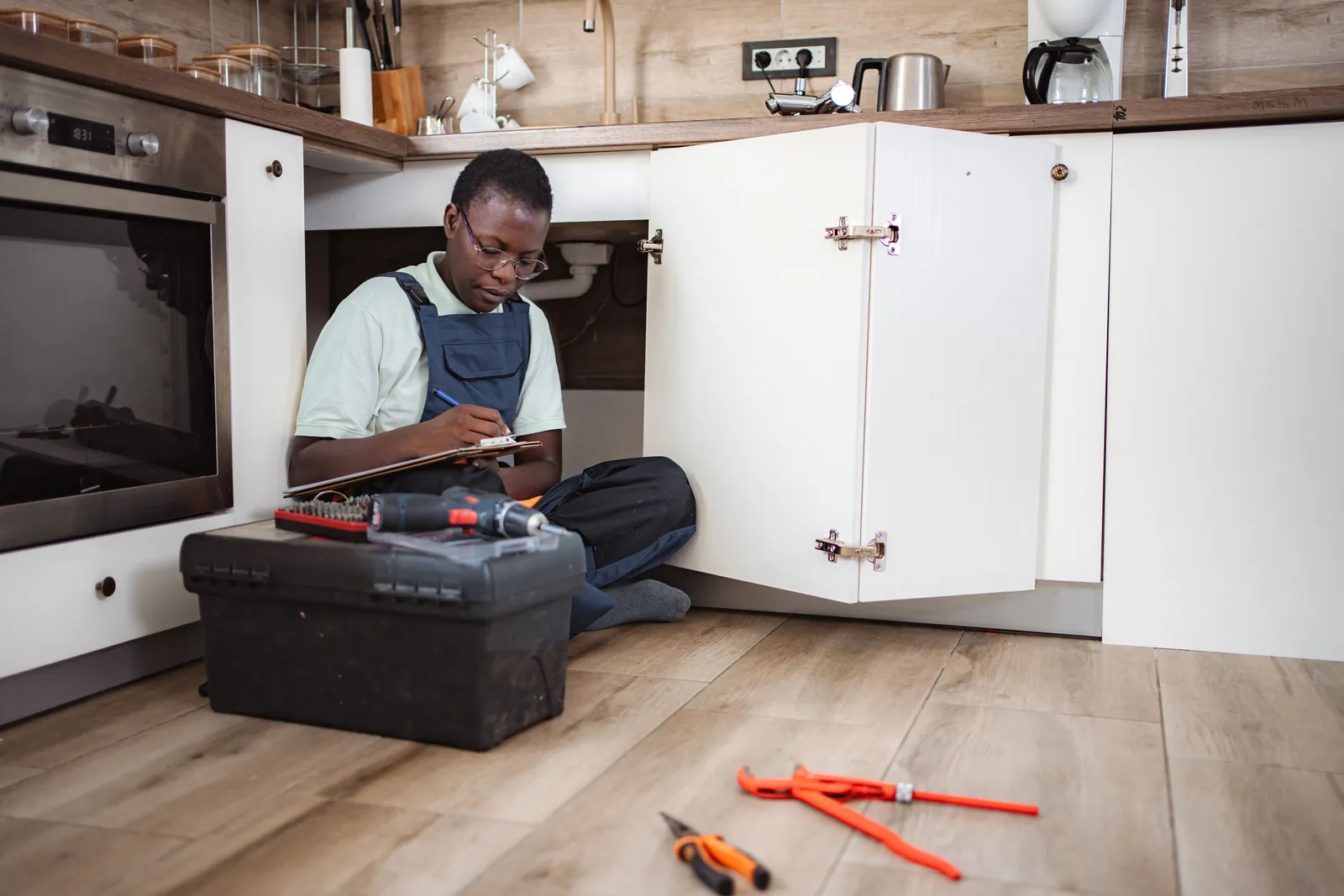
- under the kitchen sink
- in an airing cupboard or under the stairs
- under the floorboards near the front door
- in a garage, utility room, bathroom or cellar
Flats may have a communal valve where the supply enters the building, as well as a valve for your own flat.
Turning The Stop Tap Off
Turn the valve clockwise. It may take several turns before you feel resistance. Water can keep flowing from the taps for a few minutes as the pipes empty. Handle the valve gently and never force it; if it will not turn, ask a qualified plumber to repair or replace it.
The Outside Stop Tap
There is usually also an external stop tap near your boundary, under a small cover about the size of a CD case, or in the same pit as your water meter. It belongs to your water supplier, so ask their permission before using it, warn neighbours if the supply is shared, and contact your supplier if you cannot find or turn it. The WaterSafe guide to turning off your water supply explains both types of stop tap.
Turning The Water Back On Safely
Turn the internal stop tap anti-clockwise, slowly and without forcing it, and give the water a few minutes to come back through. Then:
- Run the cold kitchen tap slowly until the water runs clear. This may take a couple of minutes if the water looks discoloured.
- Do not use the washing machine, dishwasher or other appliances until the water is clear.
- If the water looks cloudy or milky, that is usually trapped air. It is safe and will clear from the bottom of the glass upwards if you let it stand.
- Check the boiler display and pressure gauge, and top up the pressure only as your manual describes.
If your water pressure seems low afterwards, make sure the stop tap is fully open. Once everything is running again, it is a good moment to look at ways to cut your household energy use; our article on why energy efficiency matters has some starting points.
Quick Checklist
- Know where your internal stop tap is and check it turns before you need it.
- Turning off the water supply will not normally damage a working boiler.
- Expect no hot water with a combi, and limited stored hot water with a system or regular boiler.
- Switch the boiler off if there is a leak, a fault code or water near electrics.
- Turn the water back on slowly and run the cold kitchen tap until clear.
- Leave anything inside the boiler to a Gas Safe registered engineer.
You will find more practical home guides at Beyond The Garden Gates.