House & Home
Rethinking Lighting For Darker Evenings As The Clocks Go Back
The clocks go back on 25 October. Here is how warm, layered lighting, sensible LED choices and a lit front path can make the long evenings feel cosier.
This article contains affiliate links. If you buy through them we may earn a small commission at no extra cost to you. Find out more in our editorial and advertising policy.
Getting your lighting for darker evenings right matters more than most of us admit, at least until the last Sunday in October comes round. This year the clocks go back an hour at 2am on Sunday 25 October, and from then on the commute home, the school run and the evening meal all happen under artificial light.
The easy response is to switch on the big ceiling light at teatime and leave it there until bed. It does the job, but rarely makes a room feel lived in. A little thought now, before the change, can turn those long evenings into something to look forward to rather than endure.
Why One Overhead Light Is Rarely Enough
Designers talk about lighting in three layers, and the idea is simple once you see it. Ambient light is the general glow that lets you move around safely. Task light is focused where you read, chop vegetables or work. Accent light picks out a picture, a bookshelf or a plant, adding depth and a bit of drama.
A single pendant tries to do all three at once and usually manages none of them well. It throws light down onto the floor, flattens faces and leaves the corners in gloom. Spreading light across several sources, at different heights, makes the same room feel larger, softer and far more inviting after dark.
Building Layers Of Lighting For Darker Evenings
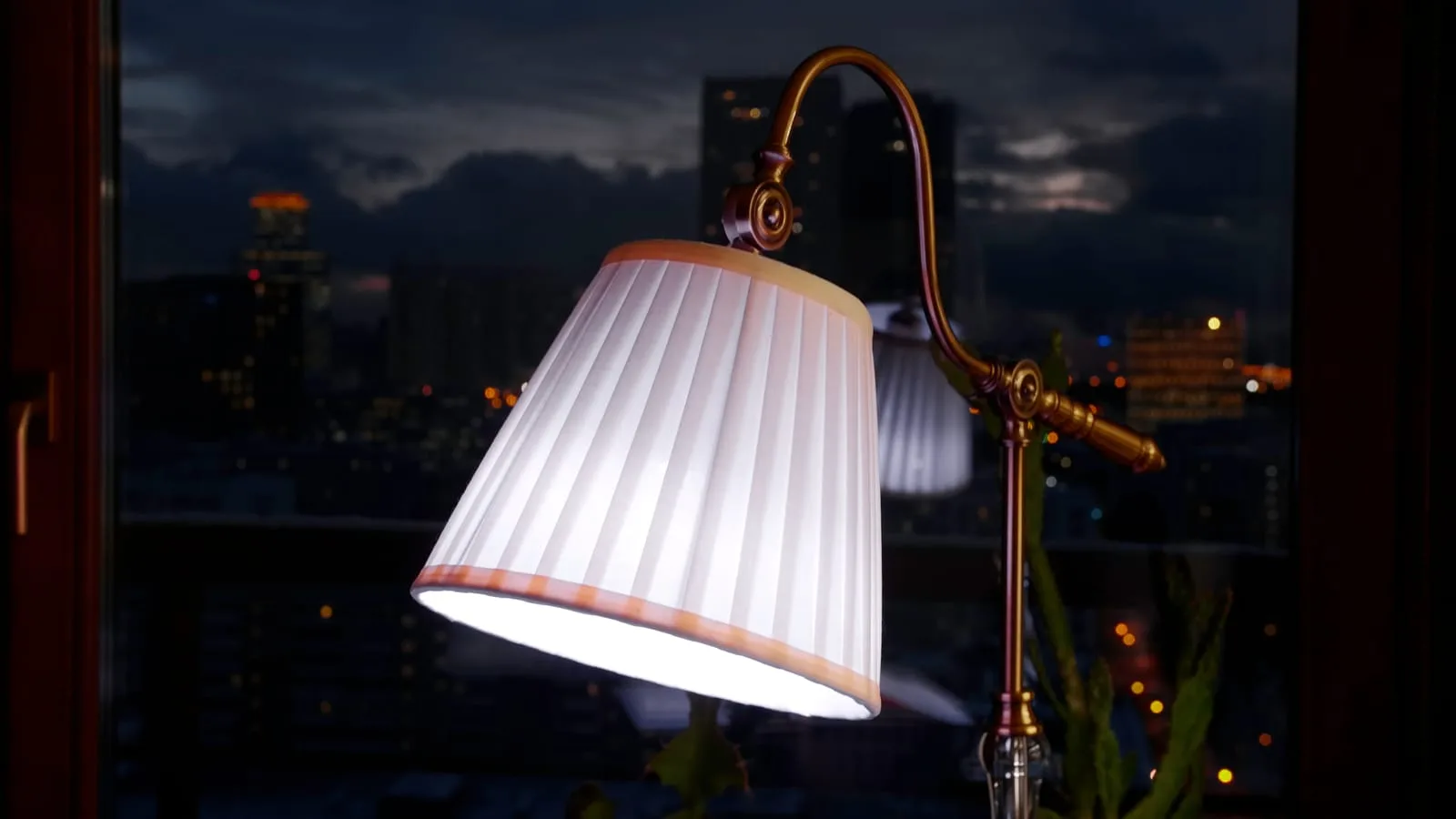
Start with the room you use most once the sun has gone. In a living room, that might mean a floor lamp beside the sofa for reading, a table lamp on a sideboard for background glow and a small light on a shelf. Together they let you keep the ceiling light off for most of the evening.
Kitchens work differently. Here task lighting earns its keep, with light over the worktop so you are not chopping in your own shadow. Hallways and landings simply need enough ambient light to move about safely, especially on stairs. If you are refreshing the living room, the table and floor lamp collections at Lights 4 Living are a useful place to compare shapes and heights before you commit.
Height matters as much as number. Lamps placed at seated eye level create pools of light that draw people together. Lights tucked low, or bounced off a wall, soften the room without glare. Experiment for an evening or two by moving what you already own before buying anything new.
Warm Colour Temperature And The Kelvin Question
Bulb packaging now lists colour temperature in kelvin, shown as a number followed by K. According to the Energy Saving Trust, very warm white sits around 2700K, a similar tone to old incandescent bulbs. Warm white runs from 2700K to 3000K and gives what it calls a warm and cosy glow. Cool white, at 4000K to 4500K, is a purer white but can feel a bit harsh.
For sitting rooms and bedrooms in winter, the warmer end is the natural choice. Cooler light still has a place in a kitchen, utility room or home office, where you want to see clearly. The same guidance suggests looking at the colour rendering index too, noting that a CRI of 80 or more is good for most household tasks.
Lumens, Watts And What LEDs Change
Many of us still think in watts, because that is how bulbs were sold for decades. Watts measure power used, though, while lumens measure brightness. The Energy Saving Trust gives a handy rule of thumb. An old 40W bulb is roughly 470 lumens, a 60W bulb around 800 lumens and a 100W bulb about 1,520 lumens.
LEDs have changed the sums entirely. The Trust says LED bulbs are just as powerful as halogen lights but use 80% less electricity, and can last up to 20 times longer in many cases. It estimates that replacing halogen spotlights with LEDs could save around £45 a year in Great Britain, or £55 in Northern Ireland. Simply switching lights off when leaving a room is worth around £7 a year in GB and £9 in NI.
When you choose replacements, match the lumens to the old bulb rather than the wattage, then pick the colour temperature for the room. The LED bulb range at Simply LED is one place to compare fittings, brightness and tones side by side. Do check the cap type against your existing bulbs before ordering.
Dimmers, Lamps And Keeping Things Safe
Dimmers are one of the cheapest ways to give a single light more than one mood. There is a catch with modern bulbs, however. The Energy Saving Trust points out that not all LED bulbs will work with a dimmer control, so look for bulbs marked as dimmable if you plan to fit or keep one.
Lamps bring their own simple safety habits, and Electrical Safety First sets them out clearly. Use the correct bulb type and never one over the lamp’s recommended power rating. Turn a lamp off, unplug it and wait a few minutes before changing the bulb. Stand it on a flat, stable surface, keep the cable tidy so nobody trips, and keep it well away from curtains, bedding and paper.
The charity also advises buying from a reputable retailer rather than a third-party seller online, and avoiding second-hand lamps whose history you cannot know. Burn marks, buzzing or crackling, or a lamp that feels too hot to touch are signs to stop using it. For anything wired into the ceiling, such as downlights, it recommends a registered electrician.
The Porch, The Path And The Front Door
Good lighting for darker evenings does not stop at the front door. A lit porch means finding your keys without fumbling, spotting the step and seeing who is at the door before you open it. A light on the path or by the side gate makes a dark walk to the bins or the shed far less of a chore.
Motion sensor lights are a sensible option for areas used briefly, as they only come on when someone approaches. The outdoor wall lights at Litecraft include up-and-down styles and models with PIR sensors, which suit a front door or a garage wall. If you are already heading outside to sort fuel for the stove, a light near the log store pays off too, as our piece on storing your winter log supply explains in more detail.
Outdoors, safety comes first. Electrical Safety First advises using an RCD with all outdoor electrical equipment and choosing leads and connectors that are suitable for outdoor use. Fixed outdoor lights wired into the mains are a job for a registered electrician rather than a weekend DIY project.
Making Lighting For Darker Evenings Work All Winter
None of this needs a big budget or a full rewire. Swap a few bulbs for warmer LEDs, add a lamp or two where you actually sit, and light the route to the front door. Those small changes make good lighting for darker evenings feel less like a fix and more like part of the season.
The week before the clocks change is an ideal moment to walk round the house after dark and see where the gloomy corners are. For more seasonal ideas for the home and garden, keep an eye on Beyond The Garden Gates.