Garden & DIY
What Size Skip Do I Need? Sizes, Permits And Loading Tips
A practical UK guide to skip sizes, matching a skip to your job, council permits, what can’t go in a skip and how to load it safely.
What size skip do I need? It is the first question most people ask when they start a clear-out or a building job, and getting the answer right saves you from paying for space you never use or, worse, running out halfway through. This guide explains the common skip sizes used in the UK, how to match one to your project, and the rules on permits, banned items and loading that catch people out.
Common Skip Sizes In The UK
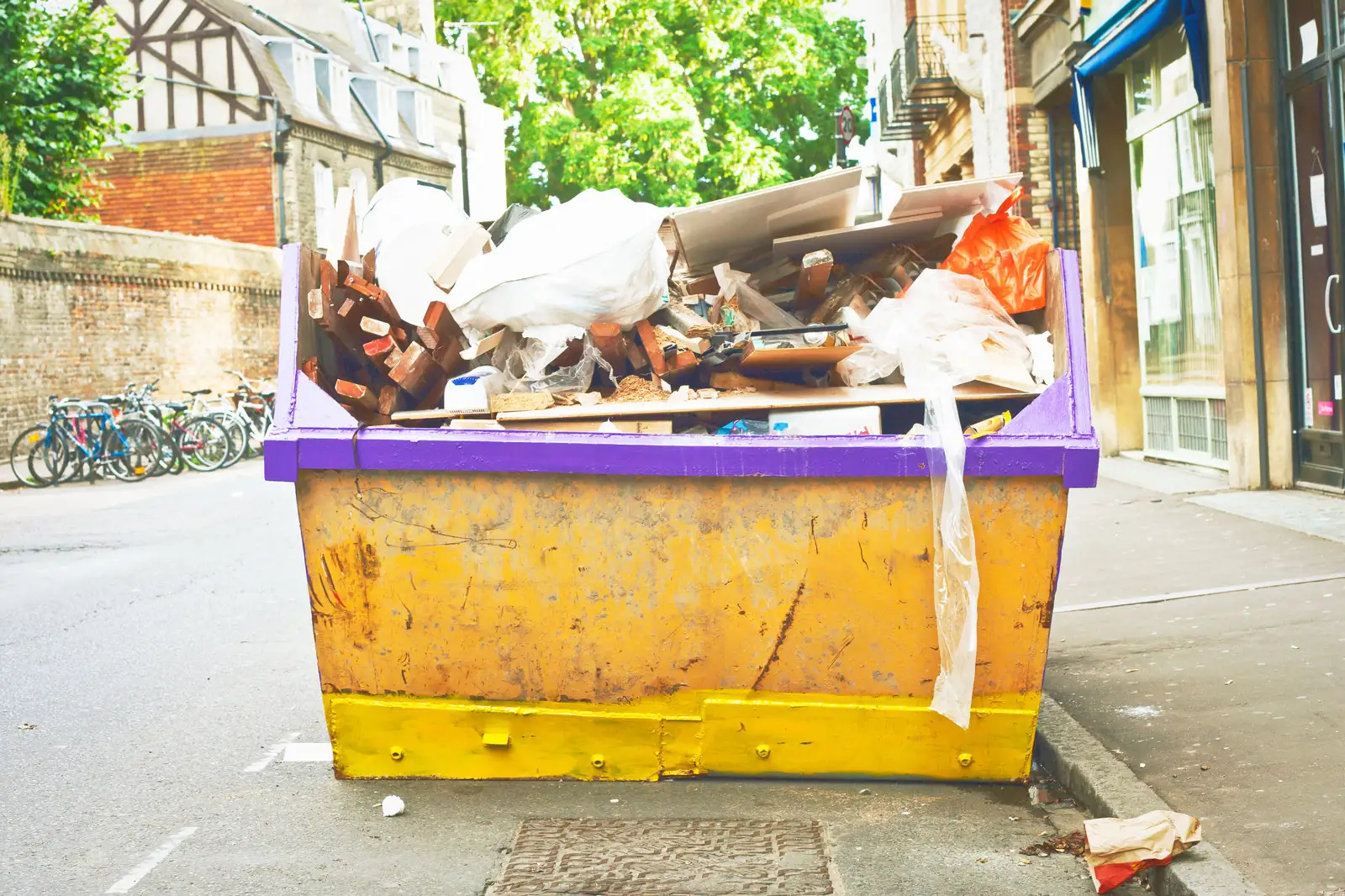
Skips are measured by volume in cubic yards. Names vary a little between companies, but most follow a similar pattern. As a rough rule, one cubic yard holds around ten loosely filled bin bags, although the real figure depends on what you are throwing away and how well you pack it.
- Mini skips (2 to 3 cubic yards) hold roughly 25 to 35 bin bags. They suit small garage clear-outs, a garden tidy or a single-room DIY job.
- Midi skips (4 to 5 cubic yards) hold roughly 40 to 60 bags. They are a common choice for stripping out a kitchen or bathroom, including old units and flooring.
- Builders skips (6 to 8 cubic yards) hold roughly 70 to 100 bags and suit larger renovations, house clearances, bigger landscaping jobs and mixed building rubble.
- Large and roll-on roll-off skips (10 cubic yards and up) are for major construction, demolition and clearing large properties. Roll-on roll-off skips, often shortened to RORO, come in sizes such as 20 and 40 yards and are usually used on commercial sites.
Not every firm offers every size, so check what your local company stocks.
What Size Skip Do I Need For My Job?
The easiest way to answer “what size skip do I need?” is to think about the type of waste as well as the amount.
Garden Clearance
Branches, hedge cuttings, turf and old fencing are bulky but fairly light. They fill a skip quickly by volume, so you may want a size up from what you first expect. A midi skip often covers a garden tidy, while a big overgrown plot may call for a builders skip.
Bathroom Or Kitchen Refit
Stripping out a bathroom suite or a run of kitchen units, worktops and flooring usually fits a midi skip. A full renovation that also involves knocking out walls, extensions or loft work tends to need a builders skip.
House Clearance
Furniture, carpets and years of stored belongings take up a lot of space. A builders skip is a sensible starting point for a whole-house clearance, and larger properties may need more than one.
Soil, Bricks And Rubble
Heavy waste is where many people go wrong. Concrete, bricks, hardcore and excavated subsoil are dense, and they can bring a skip to its weight limit at half capacity without looking full. For a job that is mostly rubble or soil, a smaller skip loaded with heavy material is often the better choice, and mixing light and heavy waste helps balance the load.
If you are in the North West and want to see how one local firm matches jobs to its range, the skip size guidance from Martlands in West Lancashire walks through its midi and builders skips alongside 20 and 40 yard roll-on roll-off skips, with advice on heavy and light waste for areas including Ormskirk, Southport, Skelmersdale and Chorley.
Do You Need A Skip Permit?
If the skip goes on your drive or other private land, you do not need a permit. If it goes on a public road, you need a skip licence from your local council, and the same applies to skip bags. In most areas the skip hire company applies for you, but in some areas you have to do it yourself, so ask when you book.
A few points to keep in mind:
- You cannot put a skip on the pavement.
- Councils may require reflective markings, traffic cones, night-time safety lamps and the skip company’s name and phone number on the skip.
- If the required lights and markings are not in place, you could be fined up to £1,000.
- Many councils restrict placement near junctions, on bends, on narrow streets and on zig-zag markings outside schools.
Exact conditions vary by council. For example, Gateshead Council’s guidance on skips on the highway asks for at least one yellow lamp at night on the side nearest the traffic, red and yellow diagonal signs at both ends and three cones facing oncoming traffic.
What You Can’t Put In A Skip
Whatever skip size you choose, some waste has to go elsewhere. Hazardous waste should be kept separate from general rubbish. Items that councils and GOV.UK list as hazardous or needing special handling include:
- Asbestos, including some storage heaters that may contain it
- Chemicals such as weed killer, brake fluid, paint stripper, solvents and pesticides
- Oil-based paint and other paint products
- Batteries, which are a fire risk in general waste
- Petrol, diesel and engine oil
- Gas containers and bottles
- Tyres
- Fridges and freezers, which contain ozone-depleting substances
- Fluorescent tubes and low-energy bulbs, which contain mercury
Most of these can go to your local household waste recycling centre, sometimes for a charge, so check your council’s website first. Large appliances such as fridges and washing machines usually need their own route too. Our guide on how to dispose of a washing machine responsibly covers the options.
Booking And Loading Your Skip
Your Duty Of Care
As a householder, you have a legal duty of care over your waste. That means checking that anyone taking it away is authorised to do so with a valid waste carrier registration. You can check a company on the Environment Agency’s public register before you book.
This matters because householders who do not take reasonable steps to check a waste carrier can face an unlimited fine, and councils can also fine you if waste you handed to an unauthorised carrier ends up fly-tipped.
Loading Tips
- Do not overfill. A skip should not be filled above the rim. Once waste reaches the edges, it is full.
- Mix heavy and light waste. Combining dense rubble with bulkier, lighter waste helps balance the load against the weight limit.
- Keep plasterboard separate where you can, as this helps it be recycled.
- Avoid dusty loose loads. Councils do not want skips on the road holding material that could blow onto passers-by.
What Size Skip Do I Need? Quick Answers
What Size Skip Do I Need For A Bathroom Refit?
For stripping out a standard bathroom, a midi skip of around 4 to 5 cubic yards is usually enough. If you are also removing walls or tiles in bulk, consider a builders skip, but watch the weight.
Can I Put Soil In A Skip?
Yes, but soil and rubble are heavy. They can hit a skip’s weight limit well before it looks full, so tell the hire company what you are loading.
Who Applies For A Skip Permit?
Usually the skip hire company applies to the council, and in some areas only registered operators can apply. Elsewhere you may need to apply yourself.
Can A Skip Go On The Pavement?
No. A skip on public land must go on the road with a council permit, not on the pavement.
Choosing Your Skip With Confidence
Start with the type of waste, then the volume, then where the skip will stand. Book a registered carrier, check permit rules if it will sit on the road, keep hazardous items out and load it no higher than the rim. For more practical guides on home and garden projects, visit Beyond The Garden Gates.