Motoring
Winter Motorcycle Riding Tips For UK Roads
Thinking of riding through the colder months? How cold is too cold, what to wear, how to stay warm and visible, and how to ride and prepare your bike for UK winter roads.
Plenty of UK riders keep going through the colder months. Winter motorcycle riding asks more of you and your machine, though. Grip is lower, daylight is short, and the cold works on your concentration long before you notice it. This guide covers whether you should ride, what to wear, how to stay warm, how to ride on cold and slippery roads, and how to get the bike ready.
Can You Ride A Motorbike In Winter, And How Cold Is Too Cold?
There’s no law against riding in winter. The real question is whether you should ride on a given day.
IAM RoadSmart, the road safety charity, gives a clear rule of thumb in its advice on riding all year round: it suggests leaving the bike at home if the temperature is below 5°C. It also points out how much wind chill matters on two wheels, noting that 4°C can feel like -5°C at 60mph. Rain can be manageable for a well-equipped commuter, but ice is another matter.
The Highway Code is similarly direct about snow and ice. Rule 228 says not to drive in these conditions unless your journey is essential. On a bike, where two small contact patches are all that keep you upright, that advice carries even more weight.
Why The Cold Affects You, Not Just The Bike
IAM RoadSmart explains that when you get cold, your body protects its core by reducing blood flow elsewhere, including to the brain. That means slower thinking and poorer judgement at exactly the moment you need them most. Numb fingers also make it harder to use the brake and throttle smoothly. Staying warm is part of riding safely.
What To Wear For Winter Riding
The only piece of kit the law requires is a helmet. GOV.UK’s guidance on motorcycle helmets and safety equipment says you must wear a helmet that meets the set safety standards, and that any visor or goggles must meet approved standards too. There’s no law about wearing other protective clothing, but GOV.UK strongly recommends specialist motorcycle gear because it could save your life. We look at this in more detail in do you have to wear a motorcycle jacket in the UK?
In winter, the most effective approach is layering. Several thinner layers trap warm air between them and let you adjust as conditions change.
Base Layer
This sits against your skin, so it should be snug and made from a fabric that moves sweat away from you, such as merino wool or a synthetic thermal. Avoid cotton, which holds on to moisture and leaves you feeling chilled once you stop moving.
Mid Layer
A thin fleece, a thermal top or an insulated gilet adds warmth without too much bulk. The key is that it mustn’t stop your armour sitting where it should or restrict your movement at the bars. If you want more ideas, our guide to what to wear under a motorcycle jacket goes through the options.
Outer Layer
Your jacket and trousers do the heavy lifting against wind and rain. Look for kit that is windproof and waterproof, with a removable thermal liner, a high collar and cuffs that seal around your gloves. A neck tube or balaclava under your helmet stops cold air rushing down your collar.
Gloves And Boots
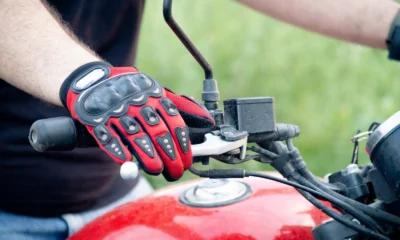
Hands and feet suffer first. Proper winter gloves are thicker than summer ones, and one IAM RoadSmart rider notes that they can feel less dexterous at first but you get used to them. Try gloves on with your jacket to make sure the cuffs overlap, and choose a pair you can still operate the controls in comfortably; our Alpinestars GP Pro R3 gloves review shows the sort of details worth checking. Waterproof boots with thermal socks keep your feet dry, and dry feet stay warmer.
How To Stay Warm On The Bike
Layers only go so far on a long or very cold ride, which is why many winter riders add heat. IAM RoadSmart’s riders recommend heated kit such as jackets and gloves, and point out that heated grips or gloves help you keep proper control of the throttle and brake rather than fighting numb fingers. Some heated jackets can be wired into the bike’s electrical system. If you’re considering grips, read our Lampa heated motorcycle grips review.
Other simple habits help:
- Start warm. Get dressed indoors and set off before you cool down.
- Block the wind. Close vents, fasten collars and check nothing is flapping open.
- Stop regularly. IAM RoadSmart’s advice is never to let yourself get cold to the bone. Take a break, have a warm drink and warm your hands before carrying on.
- Stay dry. Put waterproofs on before the rain arrives, not after.
Riding Safely On Cold, Wet And Icy Roads
Winter roads offer less grip, and the Highway Code spells out how much further it takes to stop. Rule 227 says stopping distances in wet weather are at least double those on dry roads. Rule 230 says they can be ten times greater on ice, and warns riders in particular to take care when overtaking vehicles spreading salt or de-icer.
You can read the full set of rules in the Highway Code’s section on driving in adverse weather conditions. For riders, the practical points are:
- Be smooth. Rule 231 advises accelerating and braking very gently in snow and ice. Gentle, progressive inputs on the throttle, brakes and steering are the best way to keep the tyres gripping in any cold conditions.
- Leave a bigger gap. Double your following distance in the wet, and much more if there’s any chance of ice.
- Watch for shaded spots. Ice can linger all day where the sun doesn’t reach, such as under trees, beside hedges and in cuttings, even when the rest of the road looks clear.
- Read the surface. Look well ahead for the grippiest, textured tarmac and avoid worn, polished patches and anything lying on the road, so you aren’t braking or leaning hard on a slippery surface.
- Remember your tyres start cold. Take the first few miles gently while the tyres and engine come up to temperature.
If conditions are worse than expected, turn back or wait somewhere safe.
Staying Visible In Short Winter Days
Winter means riding at dusk, in the dark and in murky weather, often with other road users who aren’t expecting a bike. The Highway Code’s rules for motorcyclists ask you to make yourself as visible as possible, with a light or brightly coloured helmet and fluorescent clothing or strips in daylight, and reflective clothing or strips in the dark. Rule 226 says you must use headlights when visibility is seriously reduced, generally when you can’t see for more than 100 metres.
IAM RoadSmart adds a couple of useful winter-specific points. A low sun can dazzle drivers pulling out of junctions, so a bike coming from the direction of the sun can be hard for them to see. Its chief examiner also suggests not riding in the tyre tracks of the car in front at night, where your headlight can blend in with the traffic behind.
Your own view matters just as much. Keep your visor clean and free of scratches, and use an anti-mist insert or demisting treatment so it doesn’t fog up. Our guide on how to be more visible on the road has more ideas.
Preparing Your Bike For A Winter Ride
Cold, wet and salty roads are hard on a bike, so give it more attention than in summer.
- Tyres: check pressures regularly, with the tyres cold, as cold air lowers pressures. Make sure there’s plenty of tread and no damage.
- Lights: check every bulb works and that lenses are clean. Road grime can dim them badly.
- Chain: road salt is harsh on chains, so clean and lubricate yours often.
- Washing: rinse salt off the whole bike after riding on treated roads, and dry it before you put it away.
- Battery: batteries lose charge more quickly in the cold, so a battery maintainer helps if the bike stands for a few days.
A word on warming up: older advice often suggests leaving the engine idling for several minutes before a ride. That isn’t necessary. Motorcycle News’ winter riding advice says 10 to 20 seconds is enough, with no need to sit there for minutes, and the Highway Code (rule 123) says you must not leave a vehicle’s engine running unnecessarily while it’s stationary on a public road. Start it, get settled, and ride off smoothly. Check your owner’s handbook if your bike has specific instructions.
If you’d rather not ride at all until spring, see our guide on how to winterise and store a motorcycle.
Quick Pre-Ride Checklist
IAM RoadSmart suggests the POWDERY check before setting off: petrol, oil, water, damage, electrics, rubber and you. In winter, run through these too:
- Check the forecast for ice, snow, fog and strong wind, and decide whether the trip is really needed.
- Check tyre pressures and tread.
- Make sure all lights work and are clean.
- Clean your visor and check the anti-mist insert.
- Put on your base, mid and outer layers, plus warm gloves, boots and a neck tube.
- Charge any heated kit and check it works.
- Plan your route and your stops, allowing extra time.
For more practical guides, take a look around Beyond The Garden Gates.