House & Home
How To Load A Dishwasher And Get The Most Out Of It
Where everything goes in the dishwasher, what to keep out of it, and simple habits with salt, rinse aid and programmes for cleaner results.
Opening the dishwasher to find a crusty plate or a cloudy glass is frustrating, and more often than not the cause is how the machine was loaded. Knowing how to load a dishwasher properly, and looking after it with the right salt, rinse aid and programme, means cleaner dishes, fewer rewashes and a machine that keeps working well for longer.
The Basic Rules For How To Load A Dishwasher
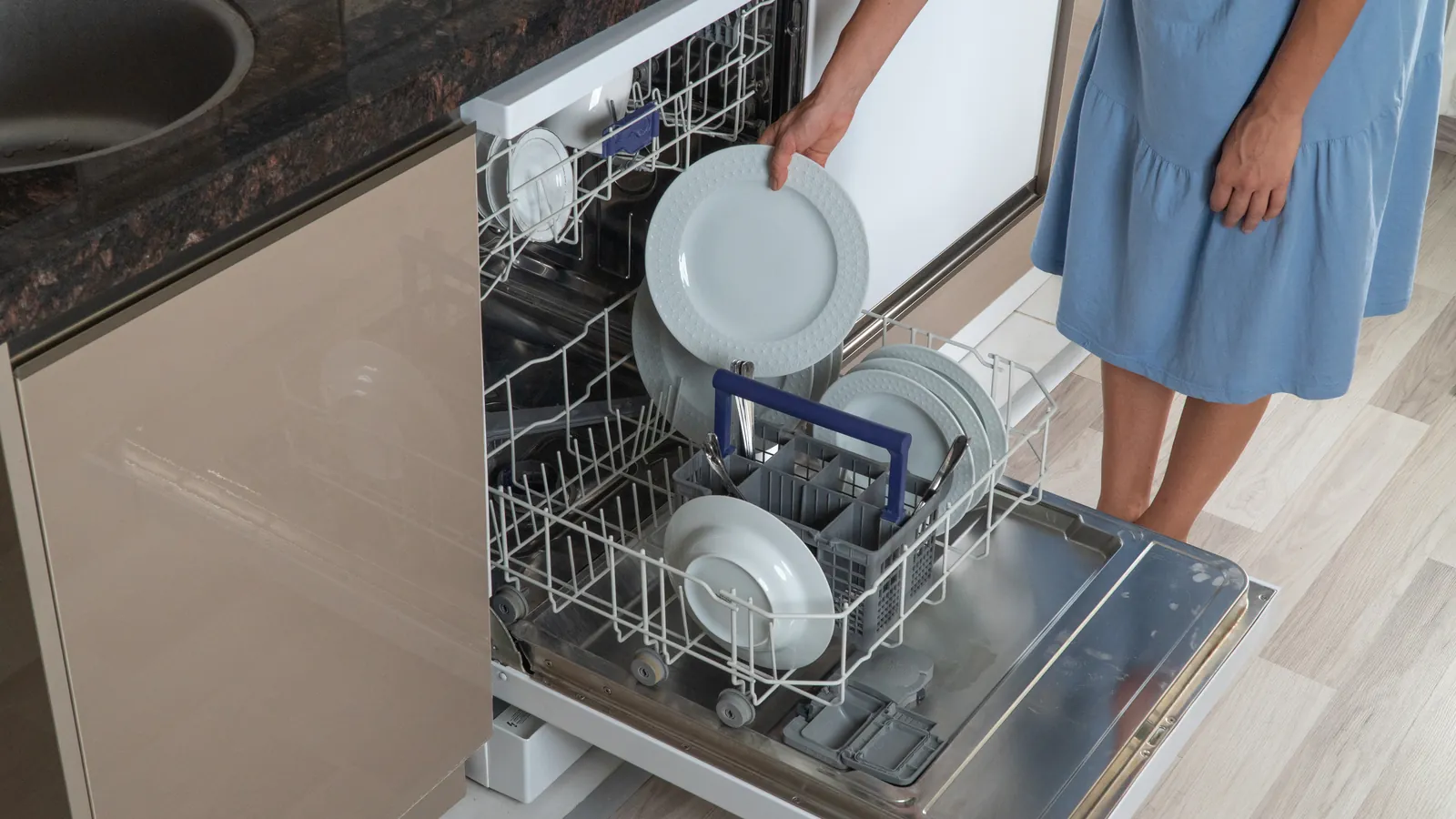
When it comes to how to load a dishwasher, everything comes down to letting the water and detergent reach every surface. The spray arms push water up from below and, in many machines, down from above, so anything that blocks that flow will leave its neighbours dirty.
- Do not overload. Leave space between items so water can circulate. Nesting bowls or stacking plates together means the inner surfaces barely get washed.
- Face the dirty side towards the centre, where the spray arms are.
- Put larger items at the sides and back so they do not shield smaller things.
- Mix plate sizes so there are gaps for water to pass through.
- Check the spray arms can turn freely before you close the door. A tall pan handle or baking tray poking up can stop them spinning.
Loading The Bottom Rack
The lower rack gets the most powerful spray and the highest heat, so it is the place for heavy and heavily soiled items.
- Stand dinner plates and side plates in the slots, angled towards the centre with the dirty side facing the spray.
- Place pans, pots and casserole dishes upside down or angled downwards so water can reach inside and drain away.
- Put roasting tins and baking trays along the sides and back. Which? says the lower rack is the best place to shift baked-on food from roasting trays.
- Serving bowls can go here too, facing down.
Loading The Top Rack
The top rack is gentler and a little cooler, which suits lighter and more delicate items.
- Glasses, cups and mugs go on top, upside down and angled so water drains off rather than pooling on the base.
- Sit glasses between the tines, not over them, so they are held steady and do not knock together.
- Plastic tubs and utensils belong on the top rack. The Which? dishwasher loading guide explains that the lower temperature there means less chance of plastic warping.
- Cereal bowls and small side dishes can go on the top rack, facing down.
- Lay long utensils such as ladles and spatulas flat on the top rack or in a cutlery tray if your machine has one.
Loading The Cutlery Basket
Cutlery is where most nesting happens. Spoons stacked inside each other come out still coated in yoghurt, and forks bunched together trap food between the prongs.
- Spread items out and mix them up, rather than grouping all the spoons in one section.
- Which? suggests placing some pieces upright and some facing down so water rinses over every surface.
- Always load knives point down, for safety when you unload.
- Keep sharp kitchen knives out of the basket altogether if you can, and wash them by hand.
What Not To Put In The Dishwasher
Most everyday crockery is fine, but some items are damaged by the heat, water and detergent. According to Which?, keep these out of the machine:
- Non-stick pans
- Wooden chopping boards
- Cast iron pans
- Silver and sterling silver
- Pressure cooker lids
- Most bronze and copper cookware
If you are unsure about something, look for a dishwasher-safe symbol on the base or packaging, and wash it by hand if there is none.
Scrape, But Do Not Pre-Rinse
Scrape leftover food into the bin or food waste caddy before loading, but there is no need to rinse plates under the tap first. Which? calls pre-rinsing a waste of water, as most programmes include their own rinse. Scraping still matters, though: large bits of food and a lot of grease or fat can clog the filter and pipes.
Getting The Most Out Of Your Dishwasher
Choose The Right Programme
The eco programme takes longer, but that is how it saves. Which? explains that a longer cycle lets the machine reach its temperature slowly and gradually, and its testing found eco cleaned nearly as well as the main programme while using less water. Quick washes switch temperature and water use faster, so they can use more energy despite being shorter, and are best saved for lightly soiled loads when you are in a hurry. Our dishwasher programmes guide explains the other settings.
Run Full Loads
A full, well-spaced load makes the most of every cycle. Just stop short of cramming items in, because a packed machine undoes the good work of careful loading.
Top Up Salt And Rinse Aid
Dishwasher salt softens the water, which helps the detergent work and prevents cloudy marks on glasses and limescale in the machine. Which? explains that all-in-one tablets often do not contain enough salt to prevent cloudiness over many washes, so topping up the salt compartment is still worthwhile, especially in hard water areas. Use proper dishwasher salt, never table salt.
Rinse aid helps water run off dishes so they dry without spots. Fill its compartment to the maximum line and turn up the dial if your dishes are still coming out wet. Which? suggests refilling salt roughly monthly and rinse aid every few weeks, depending on how often you run the machine.
Clean The Filter And Spray Arms
A blocked filter leads to gritty dishes and smells. Take it out and rinse it under the tap regularly; Which? suggests about once a month. Check the holes in the spray arms for trapped food, wipe the door seals, and run an empty cleaning cycle with a proper dishwasher cleaner from time to time. Which? advises against putting vinegar through the machine, as its acidity can damage rubber seals. Our guide to cleaning your dishwasher covers this in more detail.
Unload From The Bottom Up
Empty the lower rack first. Water often collects on upturned cups on the top rack, and unloading that first can drip it onto your clean plates below.
When Your Dishwasher Still Is Not Cleaning Well
If you are loading correctly, the filter is clean and salt and rinse aid are topped up but results are still poor, there may be a fault. Check the waste hose is not kinked and that the spray arms turn freely. Beyond those simple checks, switch the machine off at the socket and ask a qualified engineer rather than opening it up yourself; if you live in Merseyside or West Lancashire, Appliance Repair Men can diagnose the problem.
Quick Checklist For How To Load A Dishwasher
Here is how to load a dishwasher and keep it working well, at a glance.
- Scrape plates, but skip the pre-rinse
- Heavy pans and plates on the bottom, glasses, mugs and plastics on top
- Dirty sides facing the centre, nothing nested
- Cutlery mixed up, knives point down
- No non-stick, wood, cast iron, silver or copper
- Full but not crammed, on the eco programme where you can
- Salt, rinse aid and a clean filter
For more practical kitchen and appliance tips, visit Beyond The Garden Gates.